Biblical Affirmations: Who You Are in Christ
Quick answer: Biblical affirmations aren’t wishful thinking or the world’s self-talk dressed up in Christian language. They’re you agreeing out loud with what God already says is true: you’re a new creation, chosen, His handiwork, a child of God, and no longer condemned. On the days the lies feel louder than the facts, you speak the facts anyway.
Some mornings the first voice you hear isn’t a kind one. It lists what you did wrong yesterday and predicts how you’ll fall short today before your feet even hit the floor. You can’t always stop that voice from speaking. But you can decide it doesn’t get the last word.
This isn’t about repeating empty phrases until you believe them. It’s about replacing a lie with the truth God has already spoken, out loud, until the truth starts to feel like home. Here’s who He says you’re.
Affirmations rooted in Scripture
I’m a new creation. The old is gone, the new has come. My past doesn’t define me. 2 Corinthians 5:17.
I’m God’s handiwork. I was made on purpose, for good works He planned ahead of time. I’m not an accident. Ephesians 2:10.
I’m fearfully and wonderfully made. I was knit together with intention and care. Psalm 139:14.
I’m a child of God. I have been given the right to belong to Him. John 1:12.
I’m chosen. I’m part of a royal priesthood, called out of darkness into His light. 1 Peter 2:9.
There’s no condemnation for me. In Christ, my failures don’t get the final say. Romans 8:1.
I’m loved, not for what I do, but because I’m His. He delights in me. Zephaniah 3:17.

Christian Self-Compassion Worksheets
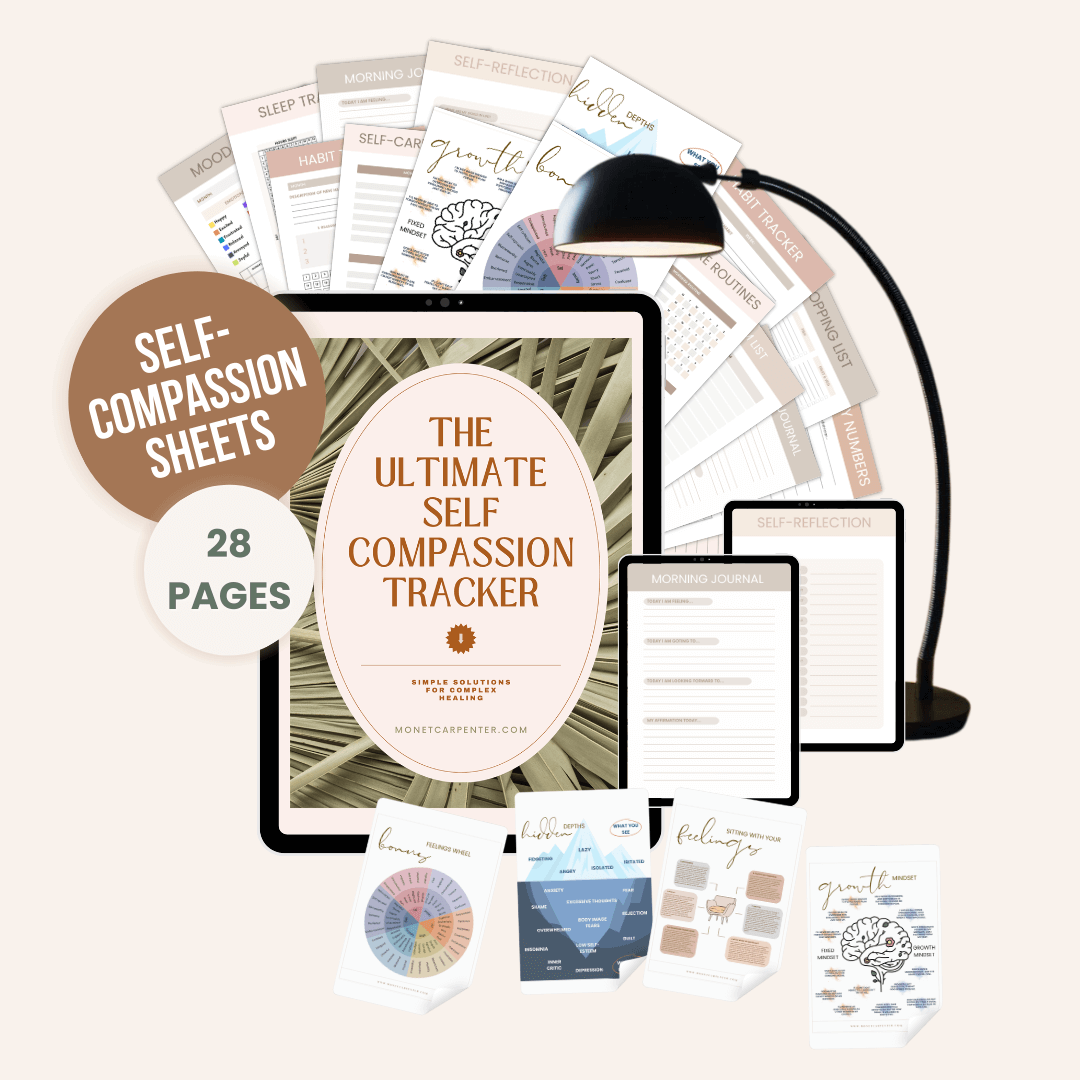
A guided way to take these from your lips to your heart: pages that help you trade the lie for the truth, one honest entry at a time. Printable, go slow.
Say the ones you can’t feel yet most of all. That isn’t pretending. That’s faith, speaking before the feelings have caught up.
Part of our complete guide: Your Worth in Christ: A Guide to Self-Compassion.
Frequently asked questions
Are affirmations biblical?
They can be, when they’re rooted in Scripture rather than in positive thinking about yourself. Speaking God’s truth over your life is something the Psalms do constantly. The difference is the source: you aren’t declaring your own power, you’re agreeing with God’s word.
What’s the difference between biblical affirmations and secular ones?
Secular affirmations usually point to your own strength (I’m enough, I can do anything). Biblical affirmations point to God’s truth and His work in you (I’m a new creation, I’m His handiwork). One rests on you. The other rests on Him, which is far sturdier.
How do I use these affirmations when I don’t believe them?
Start by saying them out loud anyway, especially the ones that feel least true. Pair each with its verse so you’re standing on God’s word, not your mood. Repetition over time closes the gap between what you know and what you feel.